We use cookies to ensure that we give you the best experience on our website.
Inquiry Now
"We’re proud of the work we do at MGM, solving problems and overcoming challenges for a wide range of clients in a variety of markets. If you’d like to know more about what we do or how we can help you achieve your objectives, contact for more details." Email: [email protected] WhatsApp:+86 170 766 13145
How to Choose the Right Jaw Crusher for Your Crushing Plant
Learn how to choose the right jaw crusher for your crushing plant — feed size, capacity, rock hardness and key specifications explained, plus common selection mistakes to avoid.
The jaw crusher is the workhorse of most crushing plants. As the primary crusher, it receives the raw material straight from the quarry or mine and determines the throughput, product quality, and operating cost of the entire downstream circuit. Choosing the right jaw crusher is not just a matter of price — it decides whether your plant runs smoothly at 100 tph or struggles with frequent blockages and excessive wear. For plant owners, the right selection means lower cost per ton, fewer unplanned stops, and a much faster return on investment.
How a Jaw Crusher Works
A jaw crusher reduces large rocks by compression. Material is fed into the crushing chamber between a fixed jaw and a movable jaw. As the movable jaw moves back and forth, it compresses the rock against the fixed jaw until the pieces are small enough to pass through the discharge opening. The crushing ratio of a typical jaw crusher ranges from 4:1 to 6:1, which makes it ideal as the first stage in a multi-stage crushing plant — before secondary cone or impact crushers take over.
Key Factors to Consider When Choosing a Jaw Crusher
1. Feed Size and Capacity
Start with the two numbers that define your project: the maximum feed size of the blasted rock and the required capacity in tons per hour. The jaw crusher’s feed opening must be large enough to accept the biggest boulders without bridging. As a rule of thumb, the feed opening should be about 15–20% larger than the largest rock size. Capacity is driven by the feed opening width, closed-side setting (CSS), and eccentric throw — confirm the rated capacity under your specific material conditions rather than relying on ideal conditions from a datasheet.
2. Rock Hardness and Abrasiveness
Jaw crushers handle hard, abrasive rock such as granite, basalt, and iron ore better than any other primary crusher. For materials above 200 MPa compressive strength, a heavy-duty jaw crusher with robust frame construction and high-manganese liners is required. For softer or less abrasive feed, a lighter configuration may reduce capital cost, but never underestimate the abrasiveness of your feed — worn jaw plates are the largest single wear cost in a crushing plant.
3. Required Output Size and Discharge Setting
The closed-side setting controls the final product size from the jaw crusher. If your downstream equipment — such as a VSI sand making machine — expects a specific feed size, choose a jaw crusher whose CSS range can be adjusted to match. A hydraulic CSS adjustment system reduces downtime when you need to change product size for different orders.
4. Crusher Type and Machine Configuration
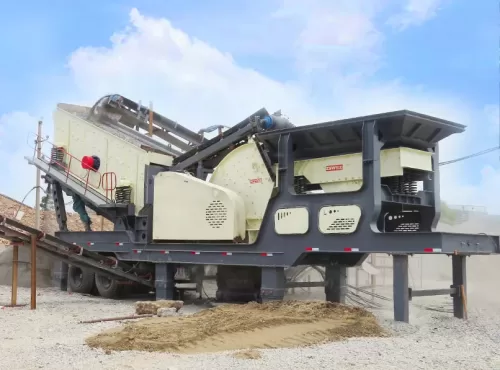
Manufacturers offer different series for different duty levels. For example, MGM produces heavy-duty C-series jaw crushers for high-capacity hard rock applications and SKJ jaw crushers designed for lower operating costs in medium-duty operations. Choose the series that matches your duty cycle: continuous 24-hour operation demands heavier construction than seasonal or short-run production. If your site changes frequently, a mobile jaw crusher plant may be more cost-effective than a fixed installation.
5. Operating Cost and After-Sales Support
The purchase price is only a fraction of the total cost of ownership. Consider energy consumption per ton, wear parts availability and price, and the manufacturer’s response time for spare parts and service. A crusher that is 10% cheaper to buy but requires longer downtime for spare parts will cost more in the first year of operation. Always check the manufacturer’s service network and the availability of jaw plates and other wearing parts in your region.
Jaw Crusher vs. Impact Crusher: A Quick Comparison
Factor
Jaw Crusher
Impact Crusher
Primary role
Primary crushing of hard rock
Secondary crushing of softer stone
Rock hardness
Very hard rock (granite, basalt, iron ore)
Soft–medium stone (limestone, gypsum)
Crushing principle
Compression
Impact
Product shape
Cubic control by downstream crusher
Good cubicity in one pass
Wear cost
Lower energy per ton in hard rock
Higher wear in abrasive feed
Best use
First stage of a crushing plant
Second/third stage or medium-duty plants
Many plants combine both: a jaw crusher for the primary stage and an impact crusher for shaping after secondary crushing.
Common Mistakes to Avoid
Undersizing the feed opening — boulders bridge at the inlet and stop production. Always allow margin above the largest rock.
Selecting by capacity alone — the same nominal capacity can behave very differently with hard versus soft rock.
Ignoring moisture and clay content — sticky feed requires a larger opening and careful hopper design.
Forgetting the downstream equipment — the jaw crusher must match the feed requirements of your cone crusher, impact crusher, or screen.
Buying only on price — spare parts, service response, and energy efficiency usually dominate long-term cost.
FAQ
Q: What size jaw crusher do I need for a 100 tph crushing plant?
A: A plant producing about 100 tph of crushed stone typically uses a jaw crusher with a feed opening around 600×900 mm or larger in the primary stage. The exact model depends on feed size, material hardness, and final product requirements — contact MGM with your raw material and target capacity for a free plant design.
Q: Can a jaw crusher crush granite and basalt?
A: Yes. Jaw crushers are specifically designed for hard, abrasive rock such as granite and basalt, with compressive strengths up to and beyond 300 MPa when matched with the right heavy-duty series.
Q: What is the difference between a jaw crusher and an impact crusher?
A: A jaw crusher works by compression and is used for primary crushing of hard rock. An impact crusher works by impact and is generally used for secondary crushing of softer stone with better cubicity.
Q: How long do jaw crusher wear parts last?
A: The life of jaw plates depends on feed abrasiveness, CSS, and feed gradation — ranging from hundreds to thousands of operating hours. High-manganese steel liners and correct CSS settings maximize liner life.
Conclusion: Build Your Plant Around the Right Crusher
The jaw crusher you choose sets the performance ceiling for your entire crushing plant. Match it to your feed size, capacity, and rock hardness, plan for wear and service costs, and verify the manufacturer’s track record before you buy. MGM has supplied jaw crushers and complete crushing plants to more than 150 countries, and our engineers provide free selection guidance, flow chart design, and turnkey EPC support from engineering to commissioning.